
Speak first. Reading comes later.
Hear it. Understand it. Say it.
Children learn their first language by listening long before they speak, and they speak long before they read. Bulbul follows the same order, in five-minute lessons that end with Urdu at your dinner table.
- 01
Hear
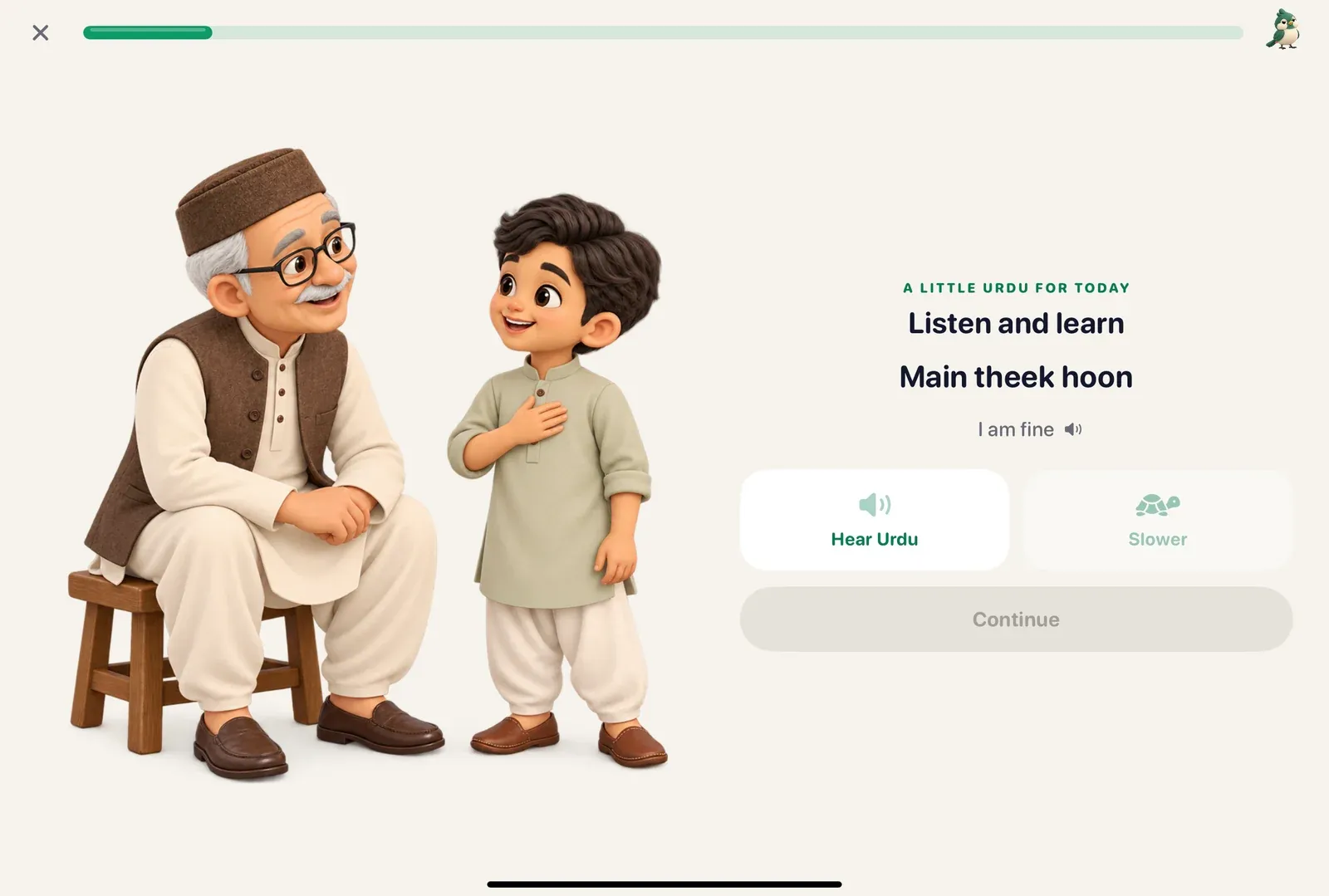
Every word is spoken first, in clear Pakistani Urdu, with a slower option and the English meaning a tap away.
- 02
Understand
Pictures, family scenes and simple actions carry the meaning, so a three-year-old can follow without reading.
- 03
Say
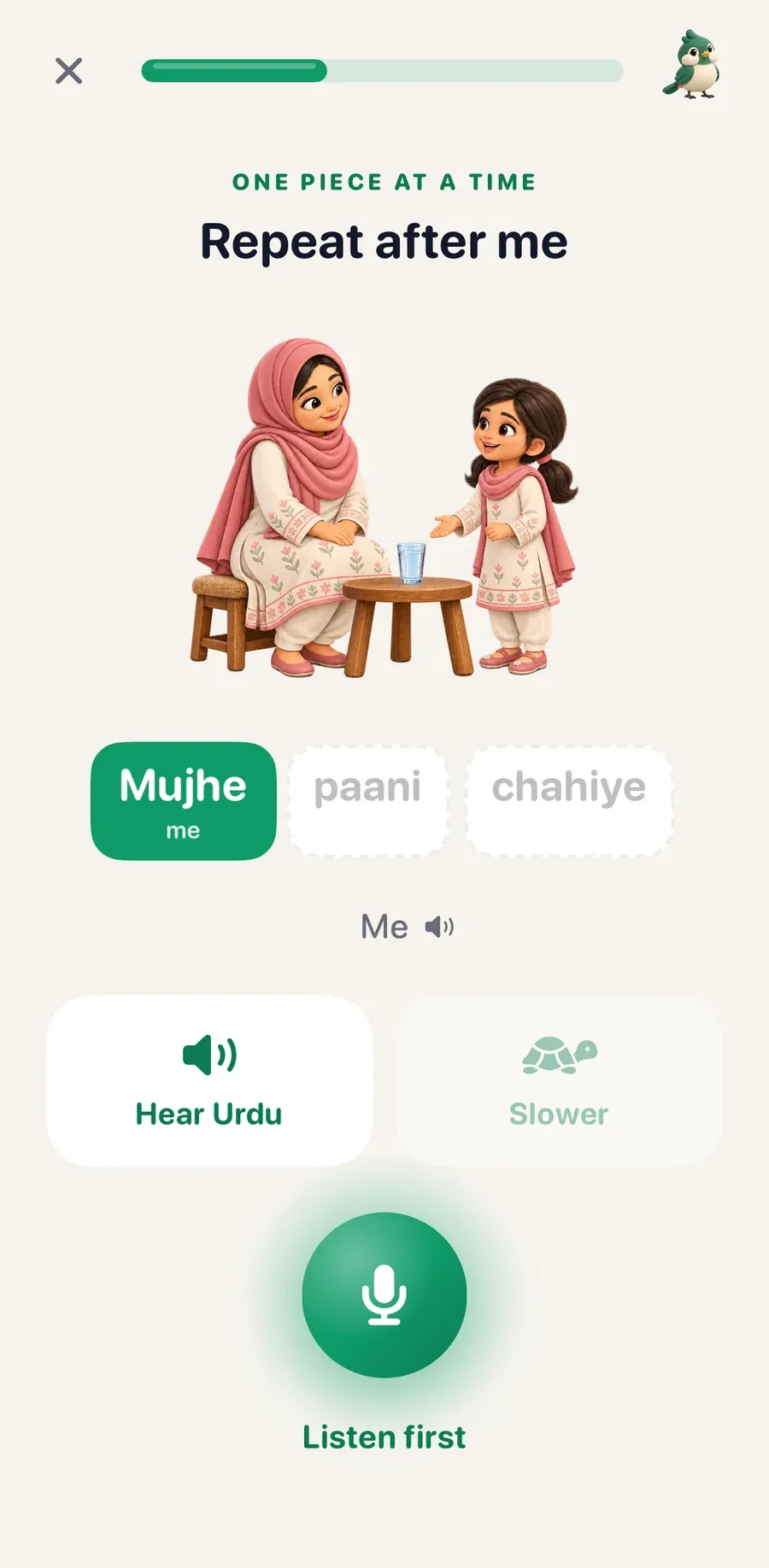
Children say it out loud, built up piece by piece, with Bulbul listening and cheering them on.
- 04
Read, later
Roman Urdu or Urdu script can be switched on for older children. Bulbul is a speaking course first.
One lesson, every time
The same eight-beat arc, so children always know what's next.
Every children's lesson follows one shape. It keeps lessons short (twelve screens or fewer for under-6s) and makes sure nothing is asked before it's been taught.
- Remember · when it fitsA quick warm-up with words from earlier lessons, so nothing is learned once and forgotten.
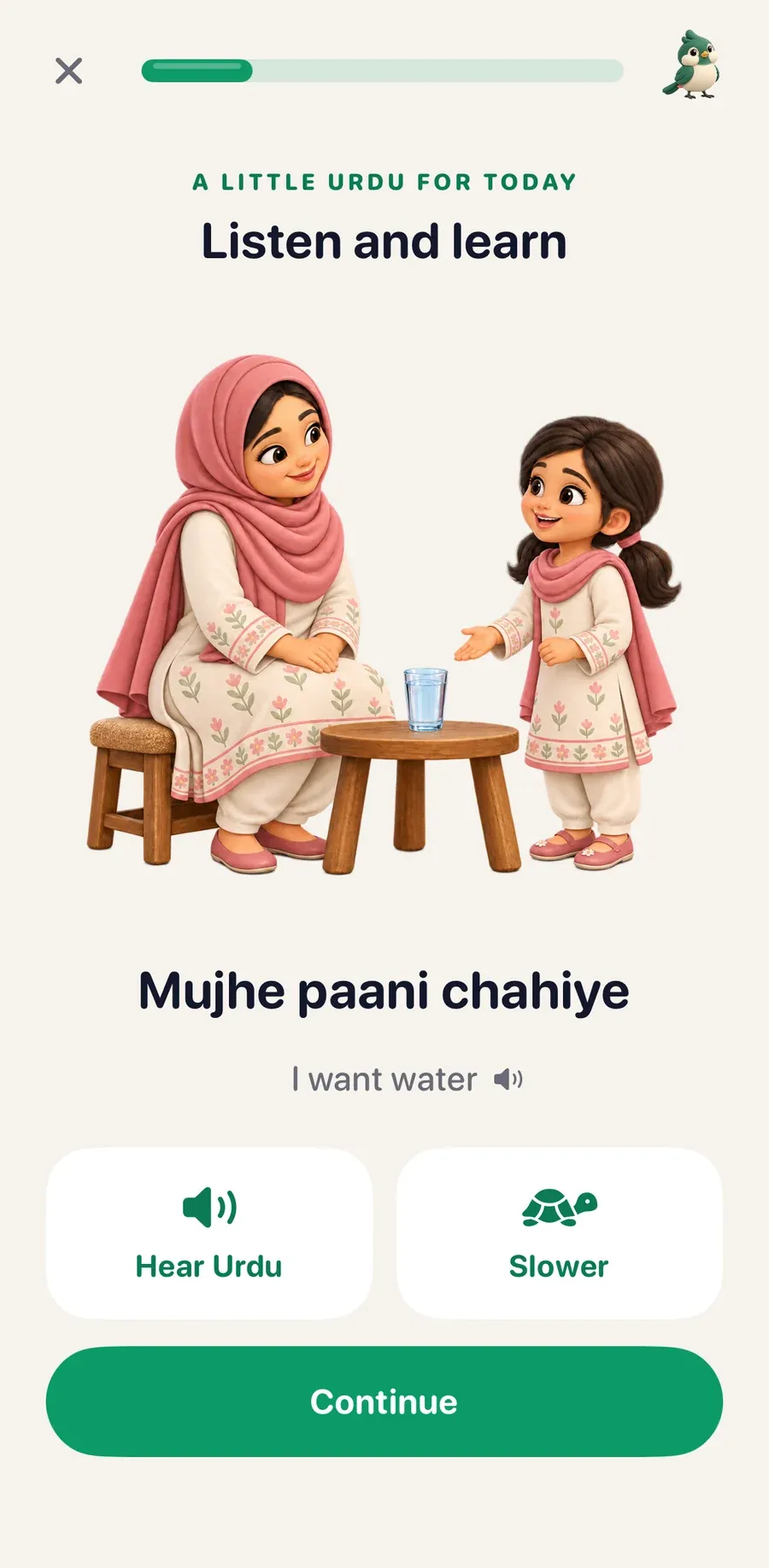
- MeetEach new word or sentence is heard first, with its picture and meaning, every time the lesson is played.
- Build“Repeat after me”: sentences are put together piece by piece. Mujhe… paani… chahiye.
- FindHear it, find the right picture. Little ones see at most two choices.
- UsePick what you'd say in a family moment, like asking Ammi for water.
- SayYour turn. Bulbul listens while your child says it out loud.
- TalkA tiny conversation with the family characters, using what was just learned.
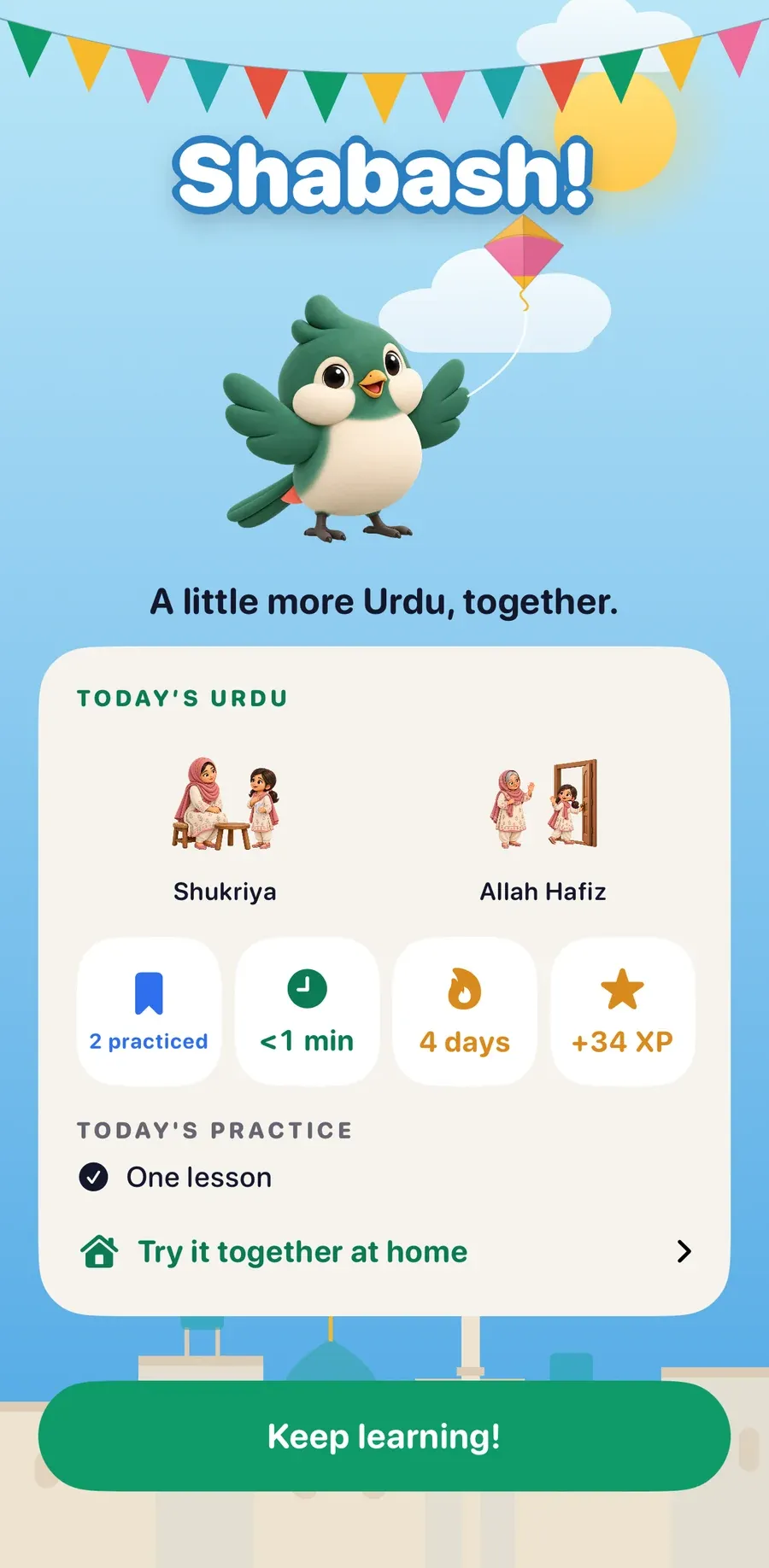
- Finish · when it fitsA celebration, and one small idea for you to try at home.




Speaking practice
Bulbul listens.
After a child hears the model and “Now you say it”, Bulbul opens the microphone by himself (grown-ups tap once) and stops when they finish. Where the iPhone or iPad has Apple's on-device Urdu speech recognition, Bulbul checks the try on the device. Otherwise Bulbul simply says “I heard you”.
Close or unclear? Bulbul says “Listen again”, plays the model (slower on the last try) and lets them have another go: three tries at most, then “Good try!” and on with the lesson. Nothing is uploaded, and a parent can switch the check off.
Mistakes teach
Never “wrong”.
A miss gets a calm explanation, the right answer and the word again, then one more chance a little later in the lesson. Speaking is never scored, and a shy child can always skip.
Memory
Words come back.
After a word is first recognised, it returns the next day, then after longer and longer gaps. Bulbul only treats a word as remembered after your child gets it right on separate days.
Real family Urdu
Nani or Dadi? Bulbul teaches who's who.
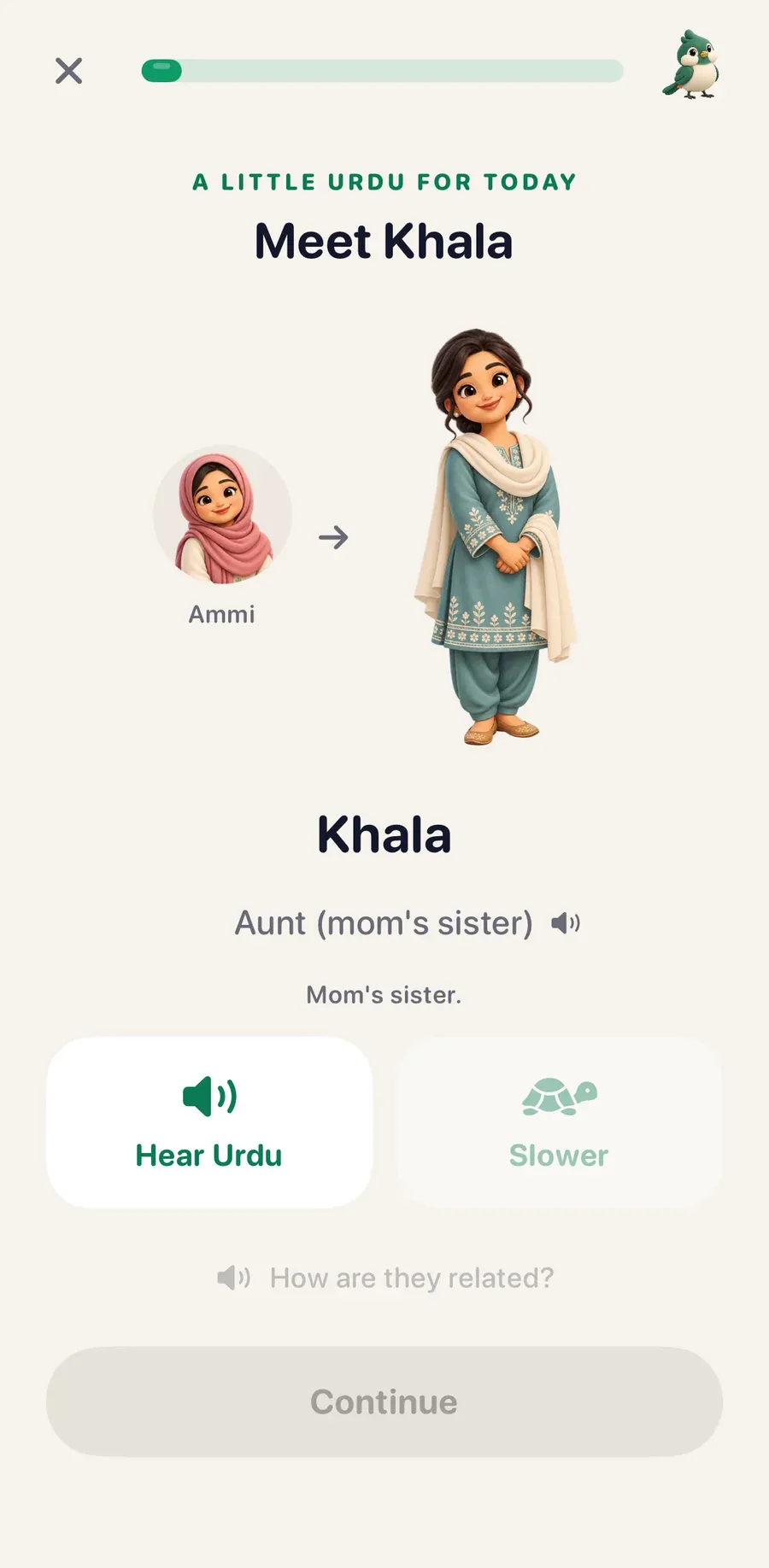
Urdu names each side of the family, and children learn the relationships, not just the words: Nani is Ammi's ammi, Phuppo is Abu's sister. Greetings use “aap” for elders, and requests come with polite replies like “Jee” and “Shukriya”.
Lessons build to tiny conversations with the family cast. Your child's first one earns the “First Conversation” sticker.
What we don't claim
Practice, not a test.
- Bulbul doesn't grade pronunciation. Bulbul's check means “Bulbul understood”, nothing more. It never counts toward progress scores.
- The speech check hasn't been validated with young children yet. In our tests it handled clear speech well; real four-year-olds are another matter, and we're testing that carefully.
- An app doesn't replace people. The goal of every lesson is a moment of Urdu with you, a grandparent or a cousin. That's why each one ends with something to try at home.
- No promises about how fast. We show what your child practised, what they remembered days later and what you heard them use. You decide what that adds up to.