For parents
Your child learns. You stay in the loop.
Your Urdu doesn't need to be perfect. Bulbul teaches in five-minute lessons; you get a clear view of what your child is practising, and one small thing to practise together tonight.
Get early access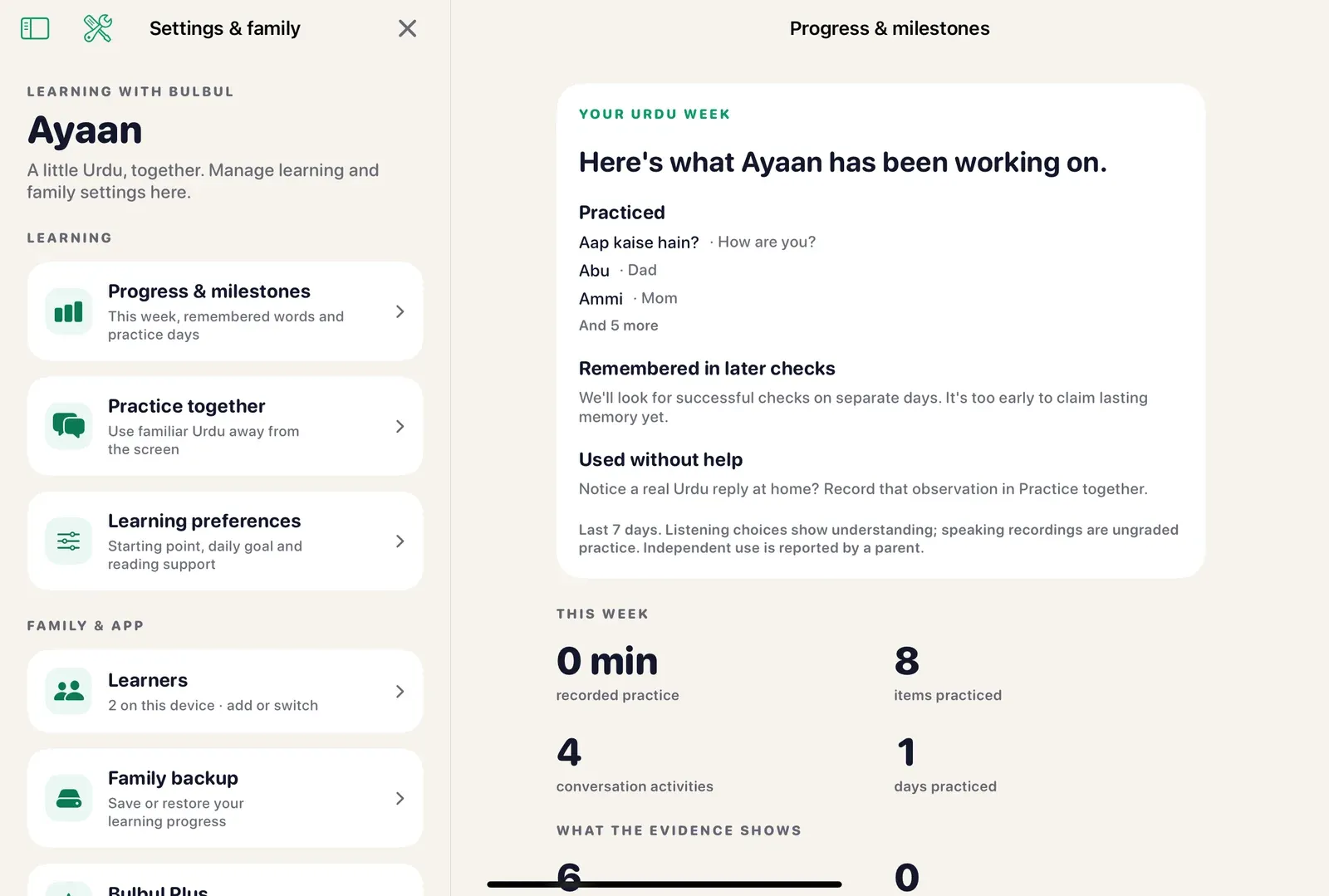
By age
Set up once. It fits their age.
- 3–5Listen, point, sayTwo big picture choices, nothing to read, Bulbul listening by himself. Sessions stay short: twelve screens or fewer.
- 6–8Sentences and familyStill picture-first, with longer sentences built piece by piece, family relationships and little conversations.
- 9–12ConversationsWord answers join the pictures. You can switch on Roman Urdu or Urdu script as extra support.
You choose your child's age band and starting point when you set up; an optional short listening check can suggest where to begin, and you can change it any time.
The parent area
Progress you can trust, and something to do tonight.
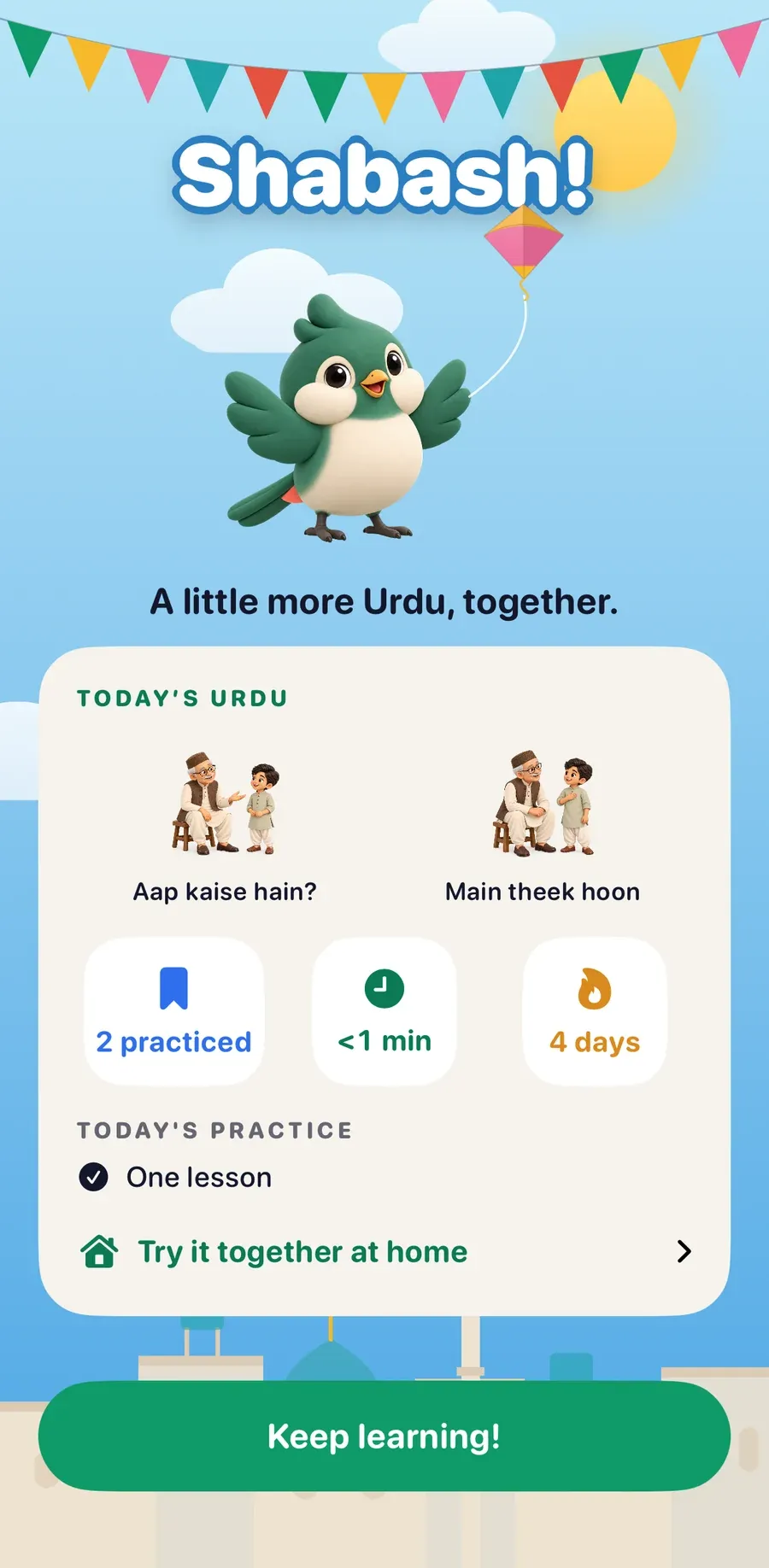
- This week. What your child practised, kept separate from what they remembered on later days and what you saw them use on their own. Bulbul doesn't dress practice up as mastery.
- Can now. Plain sentences like “Say hello and ask how someone is”, so you know what to listen for.
- Practice together tonight. One concrete idea with the Urdu to use, tied to what they just learned.
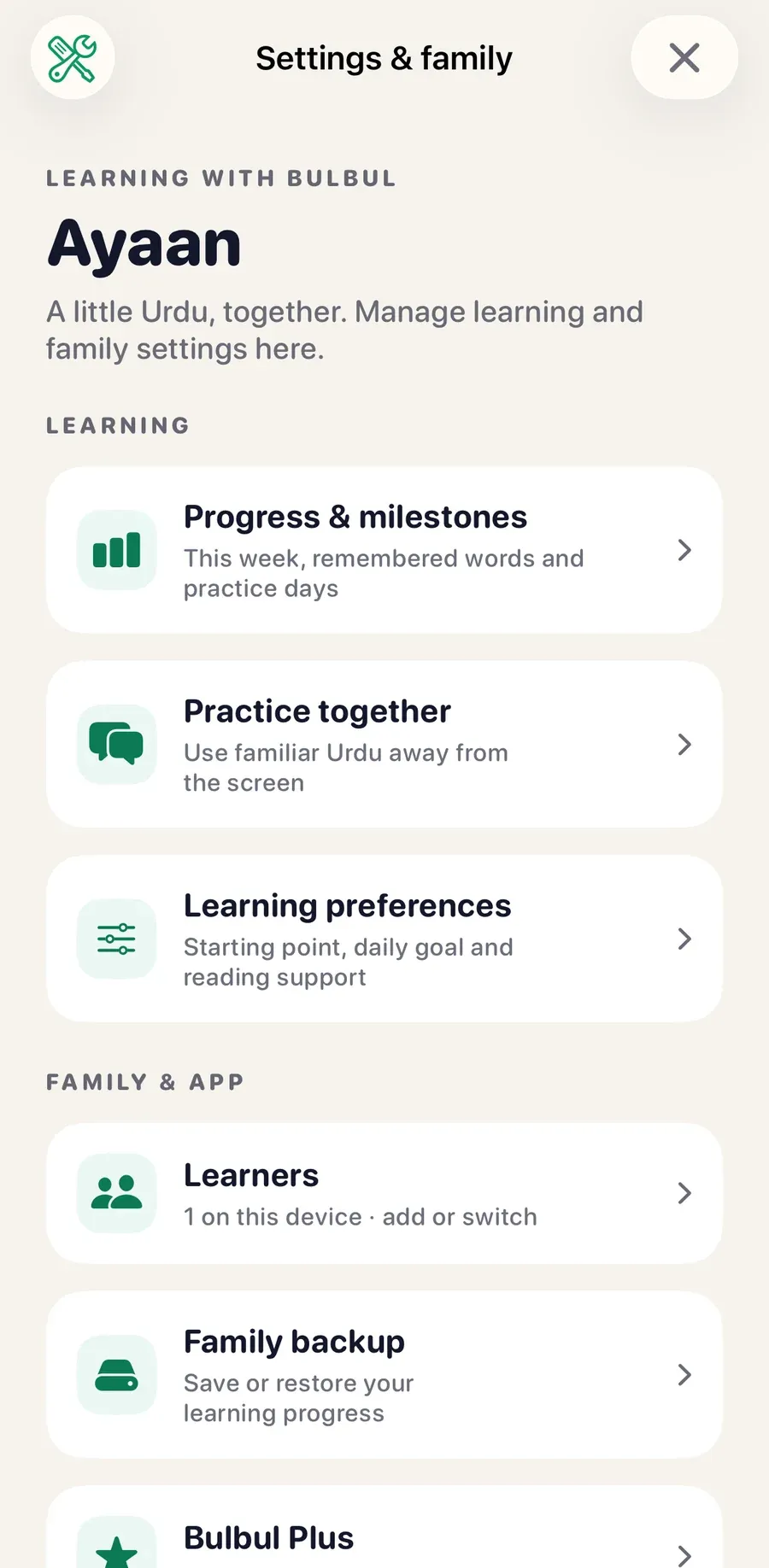
- Behind a grown-up gate. Settings and subscriptions ask a question little ones can't read.
Your Urdu doesn't need to be perfect
Five small habits that make Urdu stick.
- 1Wait a beatAt snack time, pause before handing anything over and let them ask in Urdu. Help with the first word if they need it.
- 2Name the familyLook at photos and name everyone in Urdu: Nani, Dada, Khala, Chacha. Then ask “Nani kahan hain?” and let them point.
- 3Give instructions“Aao”, “Baitho”, “Jootay pehno”. Following an instruction is understanding, and understanding comes before speaking.
- 4Praise the tryCelebrate any Urdu, whatever the accent. Correct by saying it back the right way, not by saying “no”.
- 5Bring in the grandparentsA video call where your child says one new phrase to Nani is worth more than a week of drills.
On the family iPad
Room for every child.
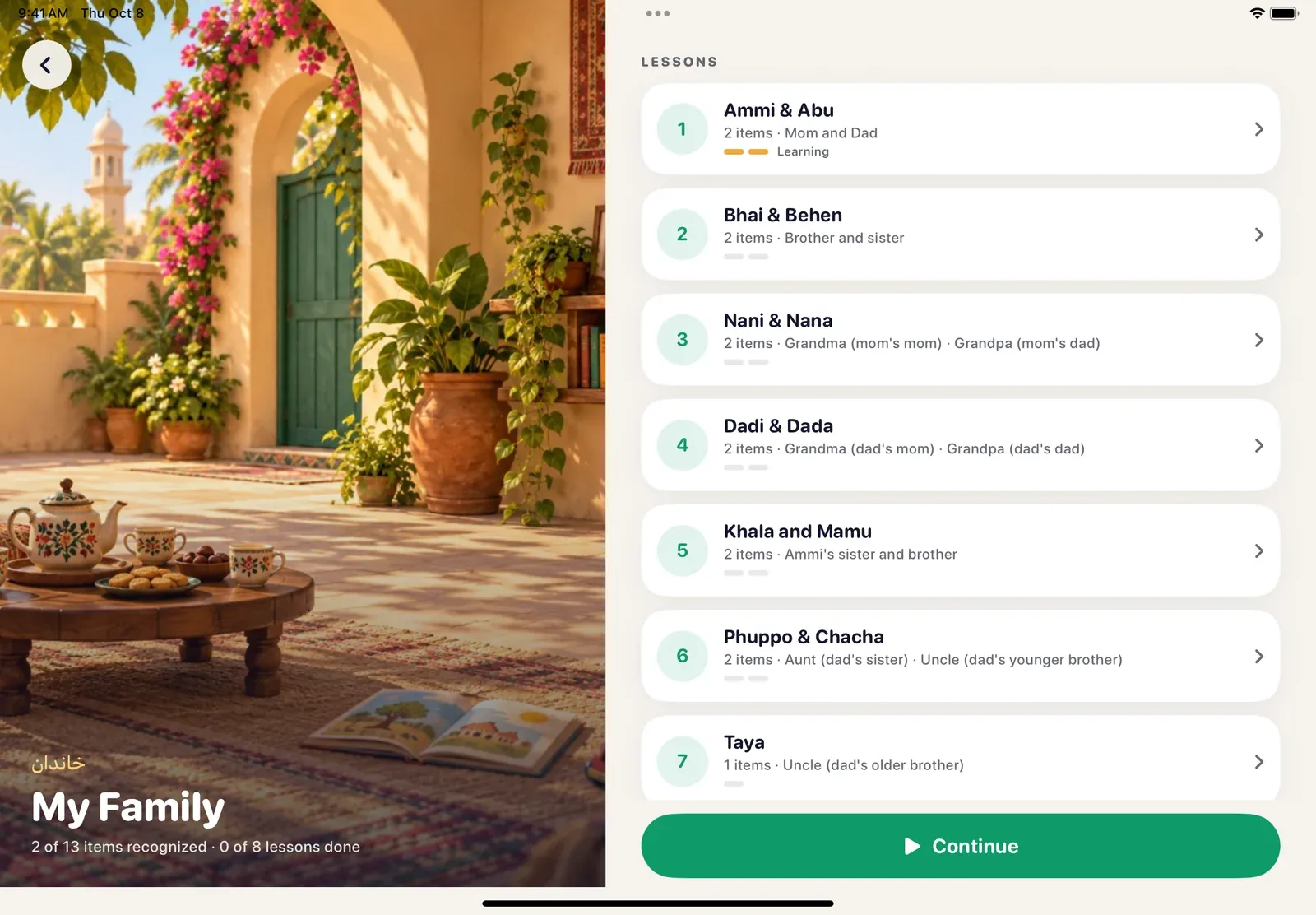
Bulbul is built for iPad as well as iPhone, in portrait, landscape and Split View. Up to six children can each have their own learner profile on one device, and a family backup file keeps everyone's progress safe.
Safe by design
The short version.
- No ads, no account. Nothing to sign up for, nothing to scroll.
- Voices stay on the device. Speaking tries are temporary files, deleted when the lesson ends. Nothing is uploaded.
- No tracking of children. Bulbul doesn't send analytics or advertising data about learners.
- Works offline. Lessons, pictures and audio live on the device.
Parents ask
Do I need to speak Urdu myself?
No. Every line is spoken in the app and the English meaning is always one tap away. If you do speak some Urdu, each lesson ends with a small idea to try together at home, so Urdu moves from the screen to the dinner table.
Does Bulbul record my child's voice?
Bulbul listens so your child can practise speaking, but nothing is uploaded. Each try is a temporary file on the device and is deleted when the lesson ends or the app closes. Where the iPhone or iPad has Apple's on-device Urdu speech recognition, Bulbul checks the try on the device; otherwise Bulbul simply says “I heard you”. A grown-up can switch the check off in the parent area.
How long are lessons? How much screen time is this?
About five minutes. Lessons for under-6s are kept to twelve screens or fewer, and you choose a small daily goal. Bulbul is meant to be short and calm, then followed by real conversation at home.
How much does Bulbul cost?
Bulbul is free to start: the opening Say hello lessons, the Family words world and practice with words your child already knows are free. A subscription unlocks the rest of the course. The price is shown in the App Store before you pay, and you can cancel any time in your Apple account settings.
Can siblings share one device?
Yes. Up to six learners can each have their own profile and progress on one device, so brothers and sisters don't overwrite each other.