
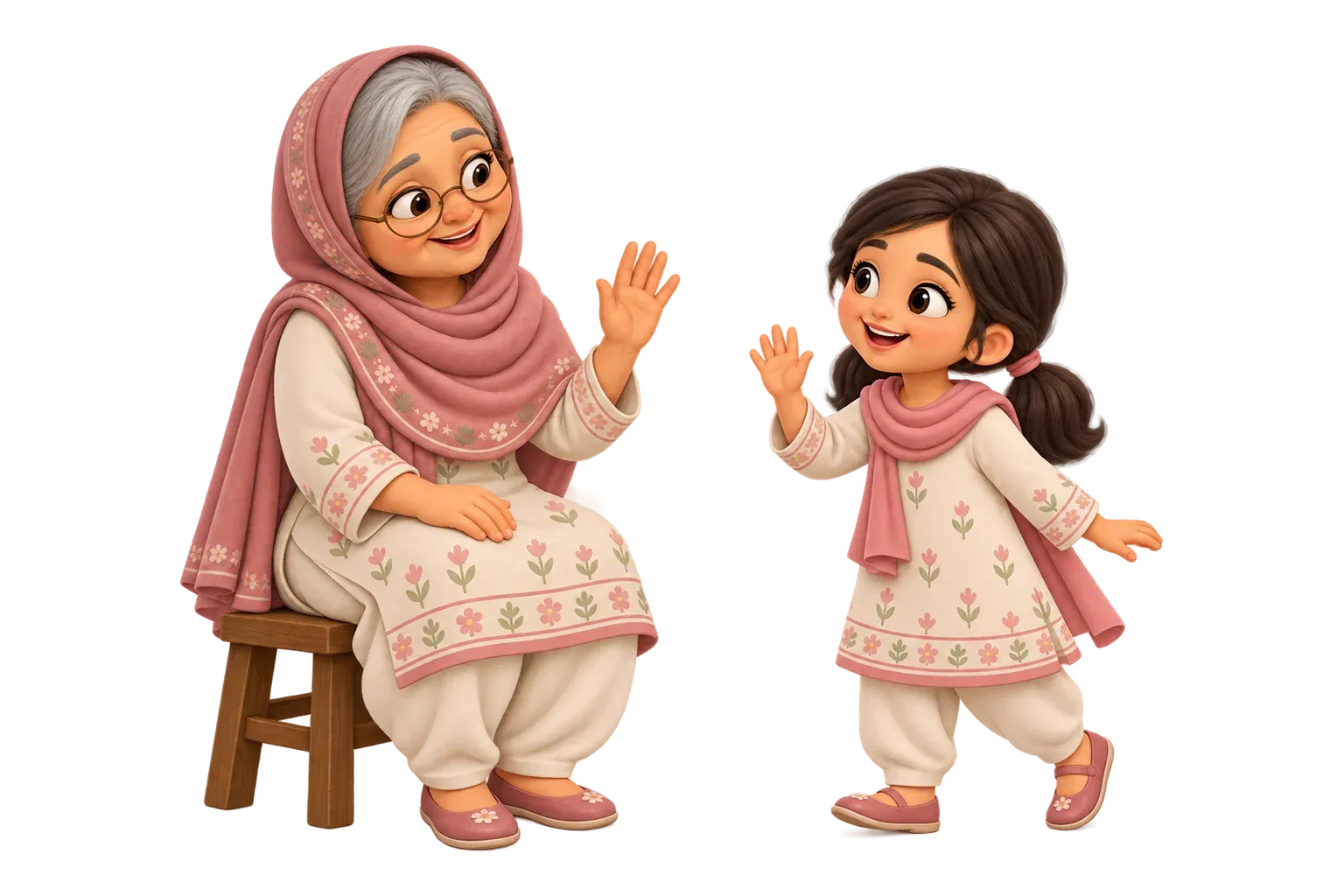
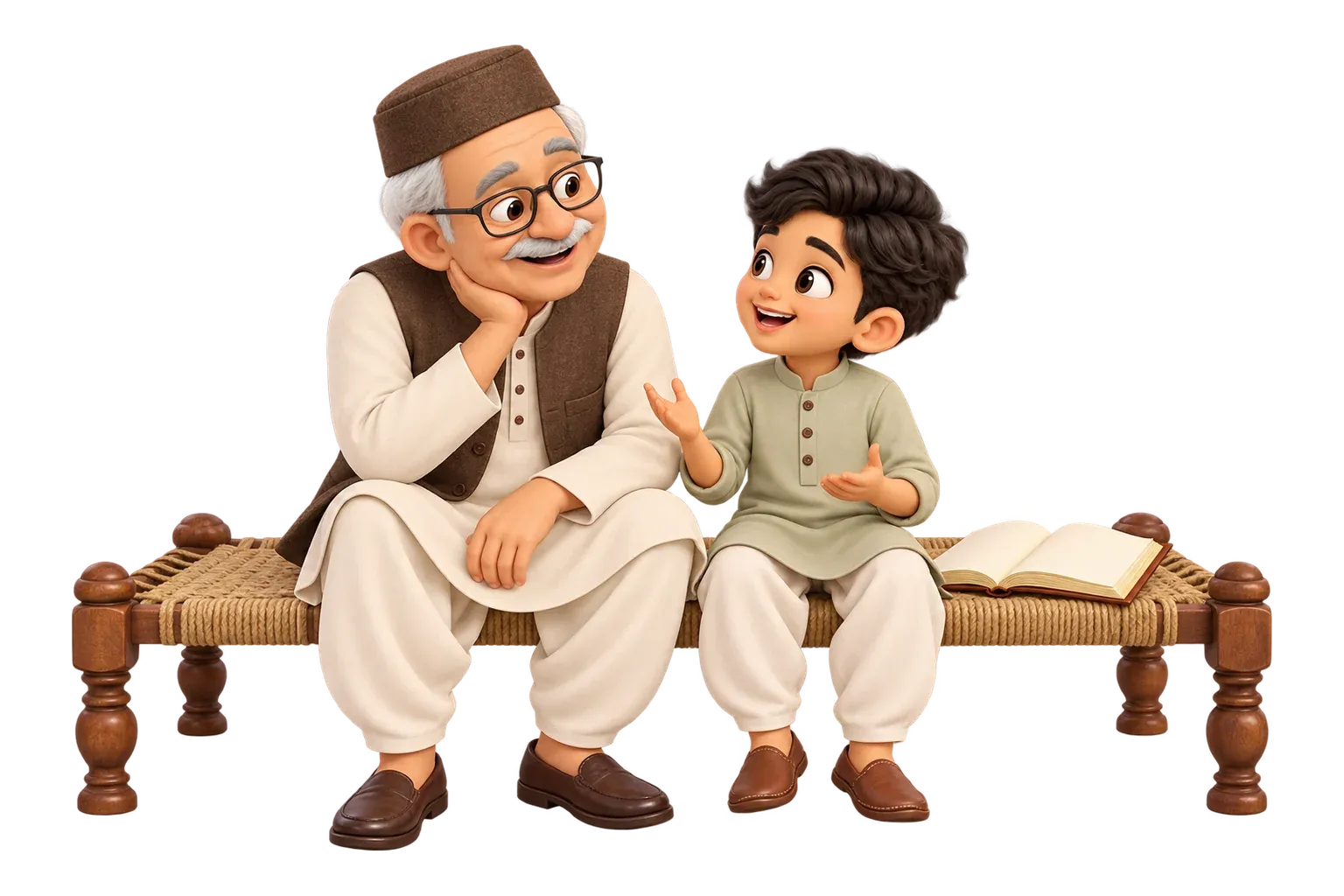
- 01
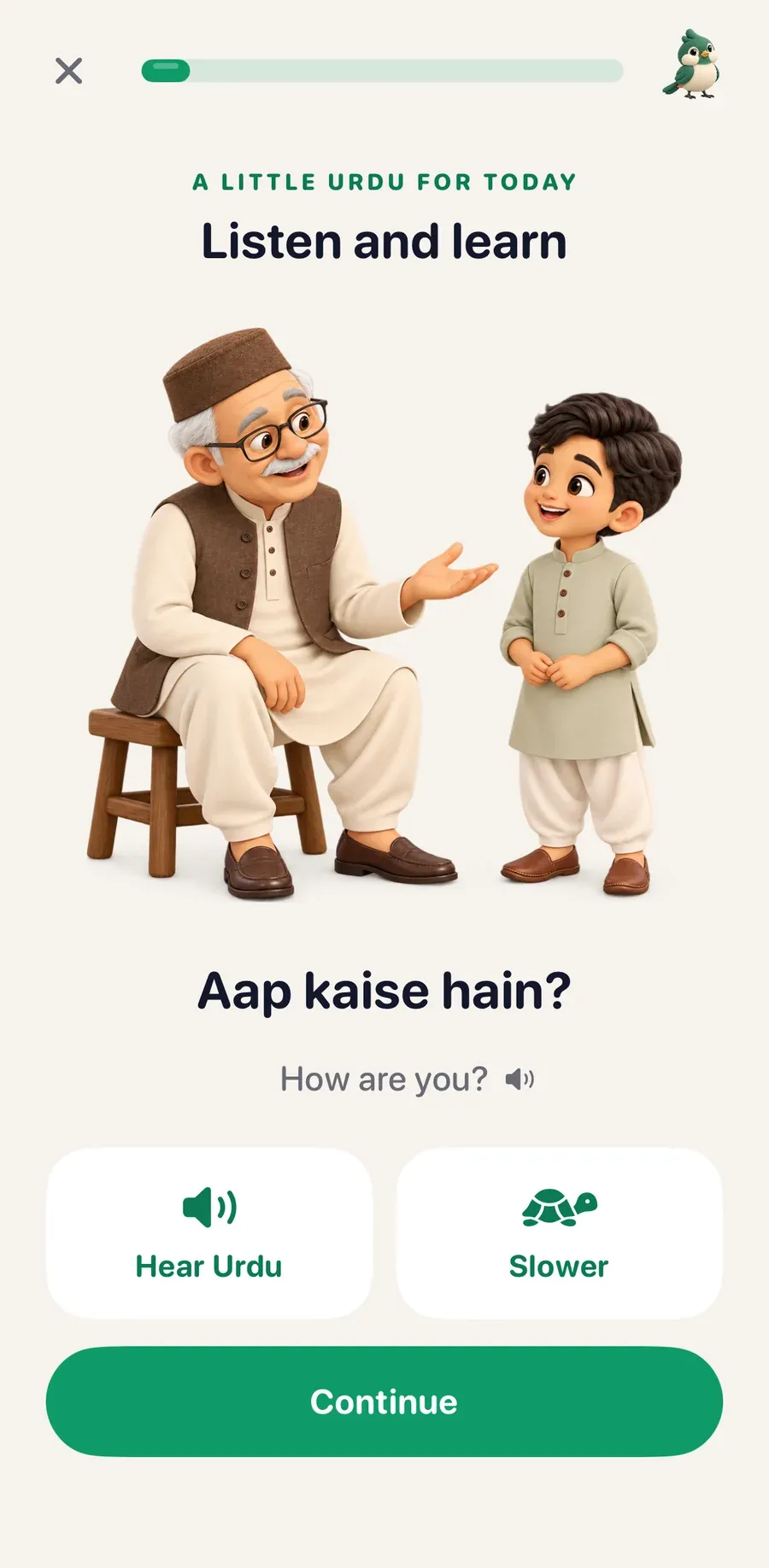
Hear it
Urdu you hear before you read
Every word and sentence is spoken before anything else, by one warm, clear narrator in Pakistani Urdu, with a slower option. Pictures and family scenes carry the meaning, so even a three-year-old who can't read can follow along.
- 02
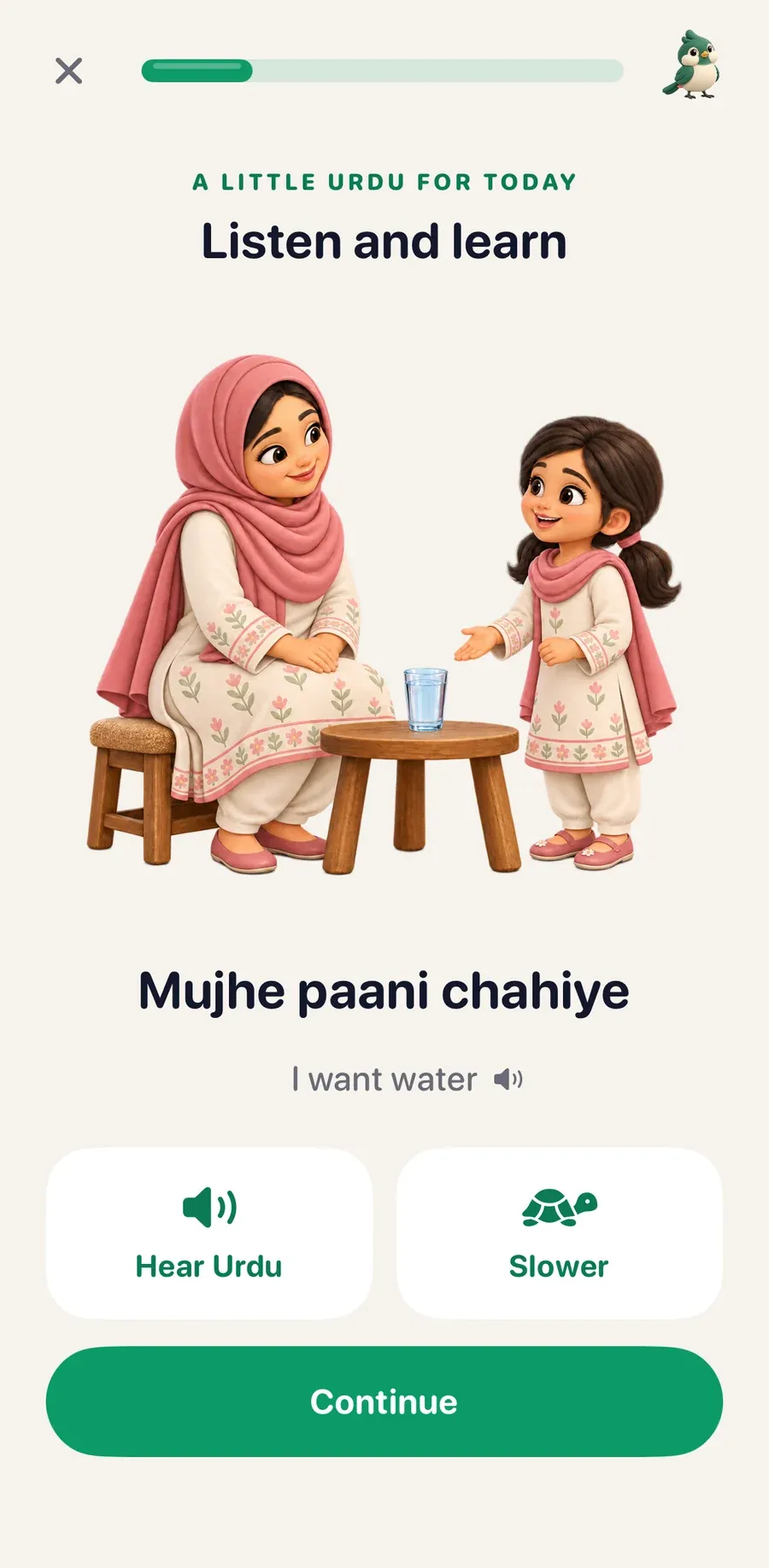
Understand it
Pictures and moments, not translation drills
Kids find the picture, follow an instruction like “Aao” (come), and choose what they'd say in a real family moment. A miss is never “wrong”: Bulbul shows the answer and brings it back a little later.
- 03
Say it
Sentences built up, piece by piece
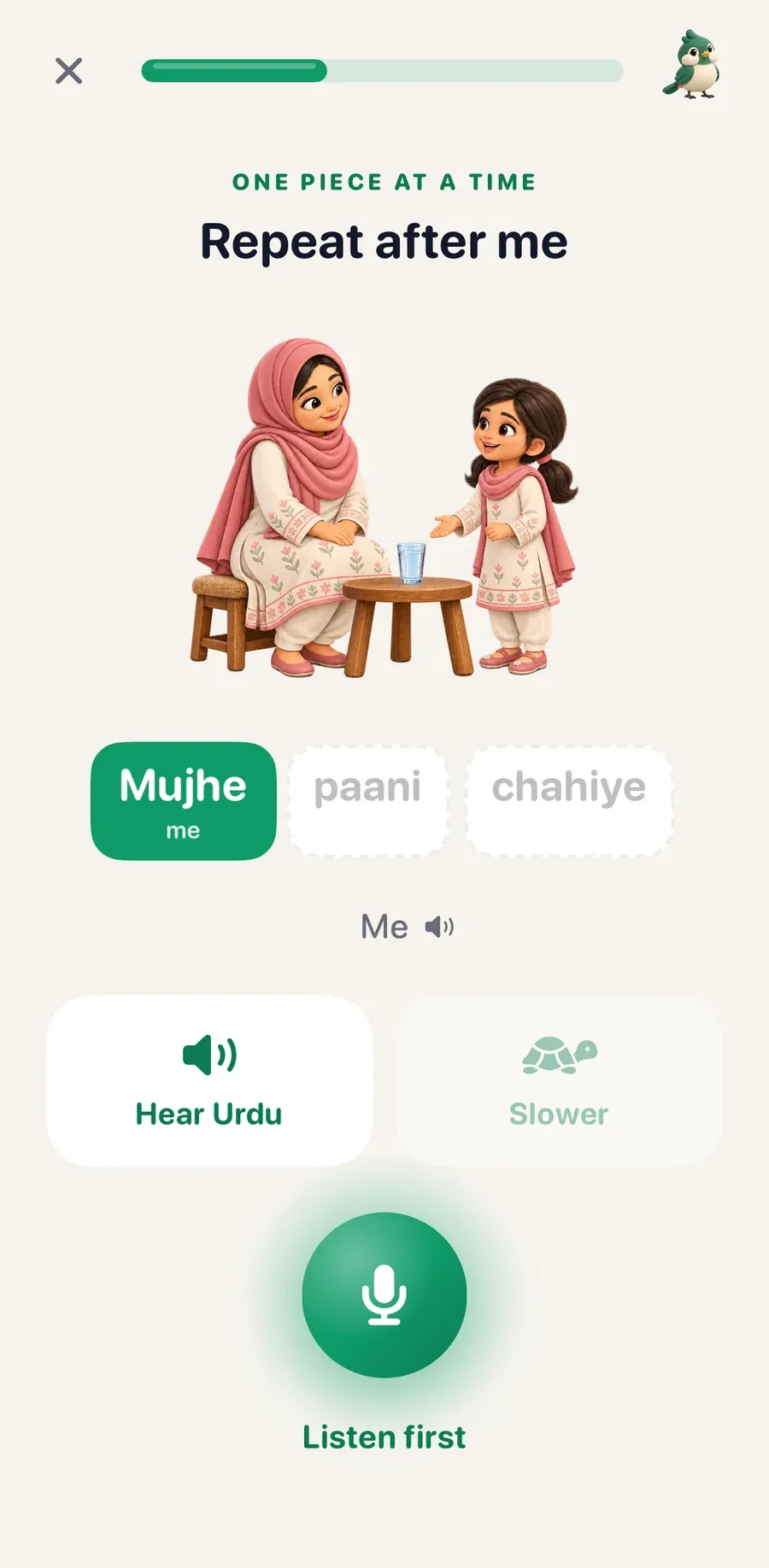
Children aren't handed a whole sentence and told to repeat it. They say Mujhe… paani… chahiye one piece at a time, then the whole thing. Then Bulbul listens, hands-free for little ones, and cheers them on.
- 04
Use it at home
Then Urdu leaves the screen
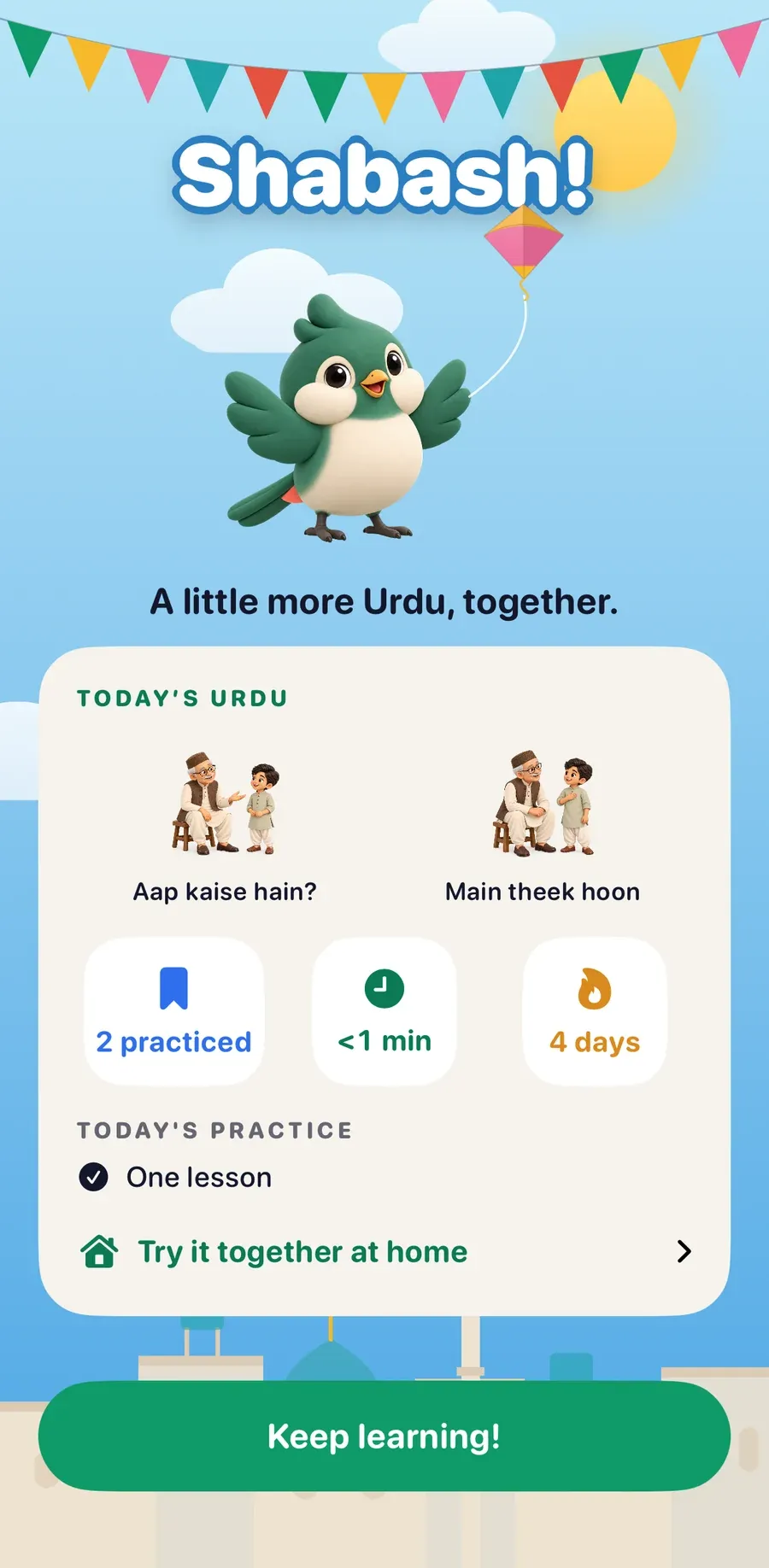
Each lesson ends with a celebration and a small, concrete idea for you, like waiting at snack time for your child to ask for their drink in Urdu. Five minutes in the app, then real conversation.
Spoken Urdu for kids 3–12 · iPhone & iPad
Help your kids grow up speaking Urdu.
For kids who understand Urdu but answer in English. Bulbul the songbird says a line, your child says it back, and Bulbul listens and cheers every try. Speak first. Reading comes later.
- Free to start
- No ads, no account
- Nothing your child says is uploaded




The heritage gap
They understand Urdu. Bulbul gets them speaking it.
It's a familiar story in families outside Pakistan. Children hear Urdu every day, understand plenty, and answer in English, often from the year school starts. What's missing usually isn't vocabulary; it's practice saying it out loud, a little every day, until answering in Urdu feels normal.
Bulbul is that daily practice: five minutes with Bulbul, then a line to try at dinner.


Try a Bulbul moment
Your child's first Urdu word. Right here.
Turn your sound on and play 30 seconds of a real lesson: meet a word, find it, then say it out loud. It's how every Bulbul lesson works, with the app's own pictures and voice.
- 1 Meet billi
- 2 Find it
- 3 Ab tum bolo: your turn
If you try speaking, your recording stays in this browser tab. It's never uploaded or scored.
Now you say it: “Billi”
Tap the circle, then say it
Shabash!
You learned billi. A real lesson strings a dozen moments like these into a tiny conversation, then gives you an idea to try at home.
In the app, little ones don't tap: the mic opens by itself after “Ab tum bolo”.
Bulbul speaks.Your child answers.
That's the whole idea. Every Bulbul lesson is a short, kind conversation, not a worksheet. Who's learning?
How Bulbul teaches
Hear it. Understand it. Say it.
The way children learn their first language: listening comes before speaking, and reading comes much later.
Made for both of you
Everything kids love. Everything parents need.
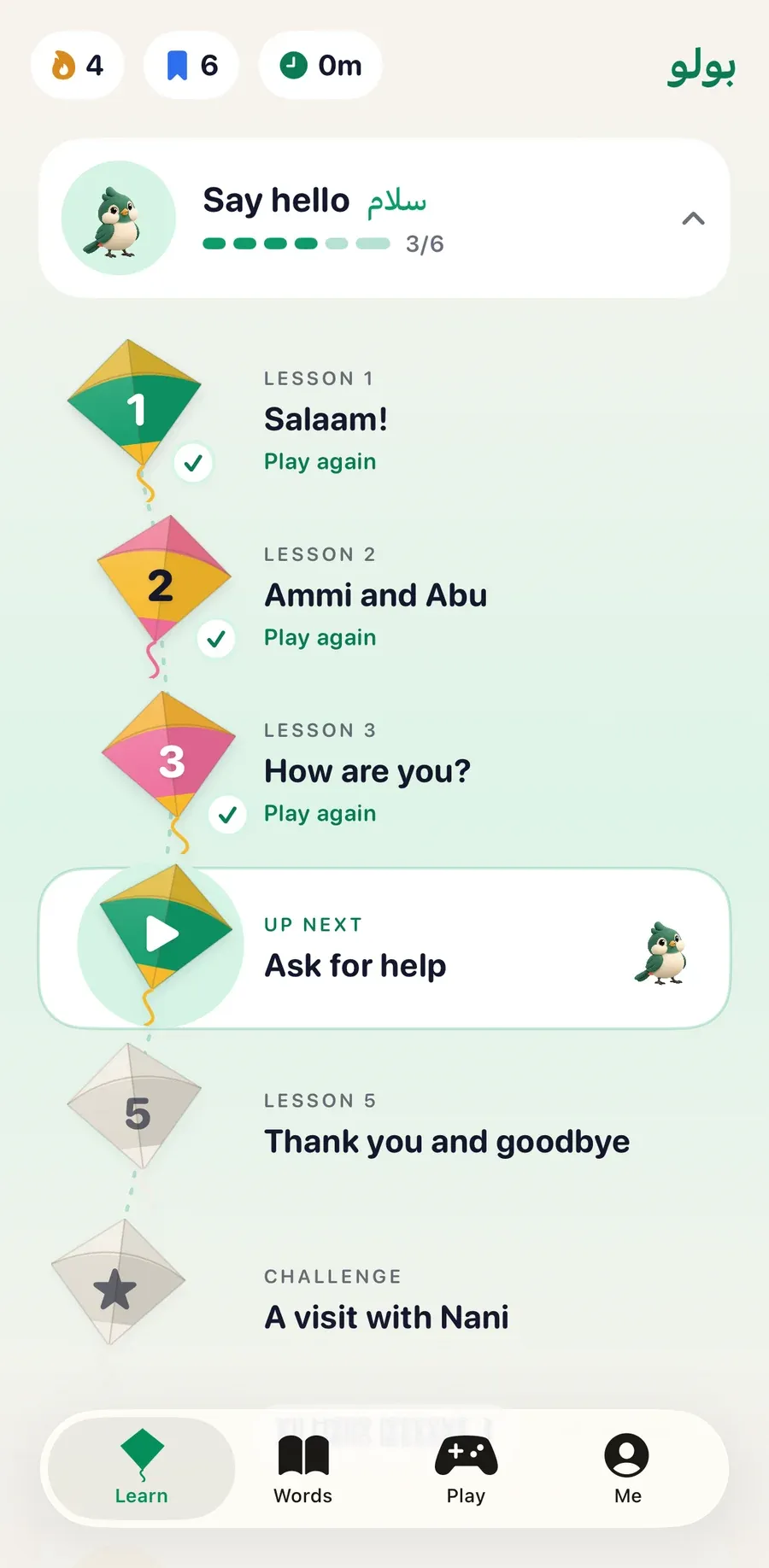
- Bulbul the songbirdA friend who speaks first, listens when it's their turn, and cheers every try.
- A kite path to followOne lesson at a time on a string of patang kites. The next step is always obvious.
- No reading neededPictures, sound and family scenes carry the meaning, so under-6s can play on their own.
- Stickers and small winsFinishing a first conversation earns a sticker to keep.
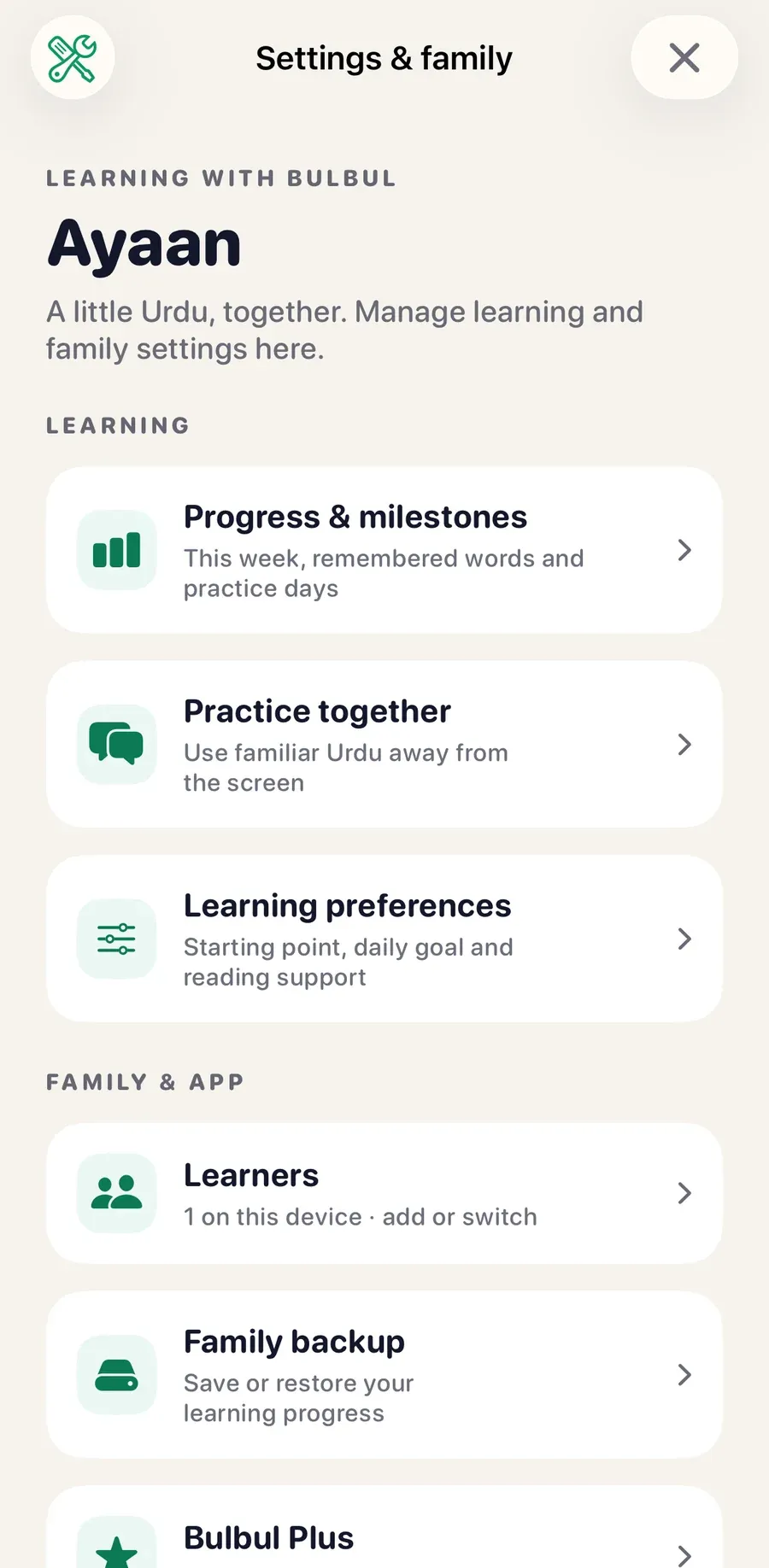
- Progress you can trustWhat your child practised, what they remembered days later, and what you heard them use. Never inflated scores.
- Practice together tonightEvery lesson hands you one small idea for dinner, bath time or the car.
- Safe by designNo ads, no account, nothing uploaded. A grown-up gate guards settings and purchases.
- Room for siblingsUp to six learners on one device, each with their own progress.

A day of Urdu at home
Five minutes in the app. The rest happens at home.
- 7:30Breakfast

Wait a beat before you pour. Let them ask in Urdu.
- 4:00After school
One five-minute lesson with Bulbul, then off to play.
- 7:00Dinner

Today's “practice together” idea, said at the table.
- 8:30Call with Nani
The moment it's all for: a goodbye that makes Nani smile.
What your child learns
Everyday Urdu, the words your family actually uses.
Four first conversations, then eleven worlds of words to explore. Tap a world to hear one.
- سلامSay helloGreet someone and answer “Aap kaise hain?”
- کچھ کھائیںAsk for a snackAsk for a drink, answer an offer, say thank you
- آؤ کھیلیںPlay togetherCome, sit, give, take, open and close
- ہمارا خاندانMeet your familyWho's related to whom, then introduce yourself
- 34 in the app
- 54 in the app
- 18 in the app
- 14 in the app
- 16 in the app
- 22 in the app
- 22 in the app
- 15 in the app
- 10 in the app
- 18 in the app
- 70 in the app
- 300Words and phrases in the appTry a few with audio here. The rest are waiting in the app.Try some words
It grows with your child
- 3–5Listen, point, sayTwo picture choices at a time and nothing to read. Bulbul opens the mic by himself.
- 6–8Sentences and storiesStill picture-first, with longer sentences, family relationships and little conversations.
- 9–12ConversationsWord answers join the pictures. Roman Urdu or Urdu script can be switched on.
- 13+Heritage trackFor teens and adults who understand more than they say.Learn more →
iPhone and iPad
Made for the family iPad, too.
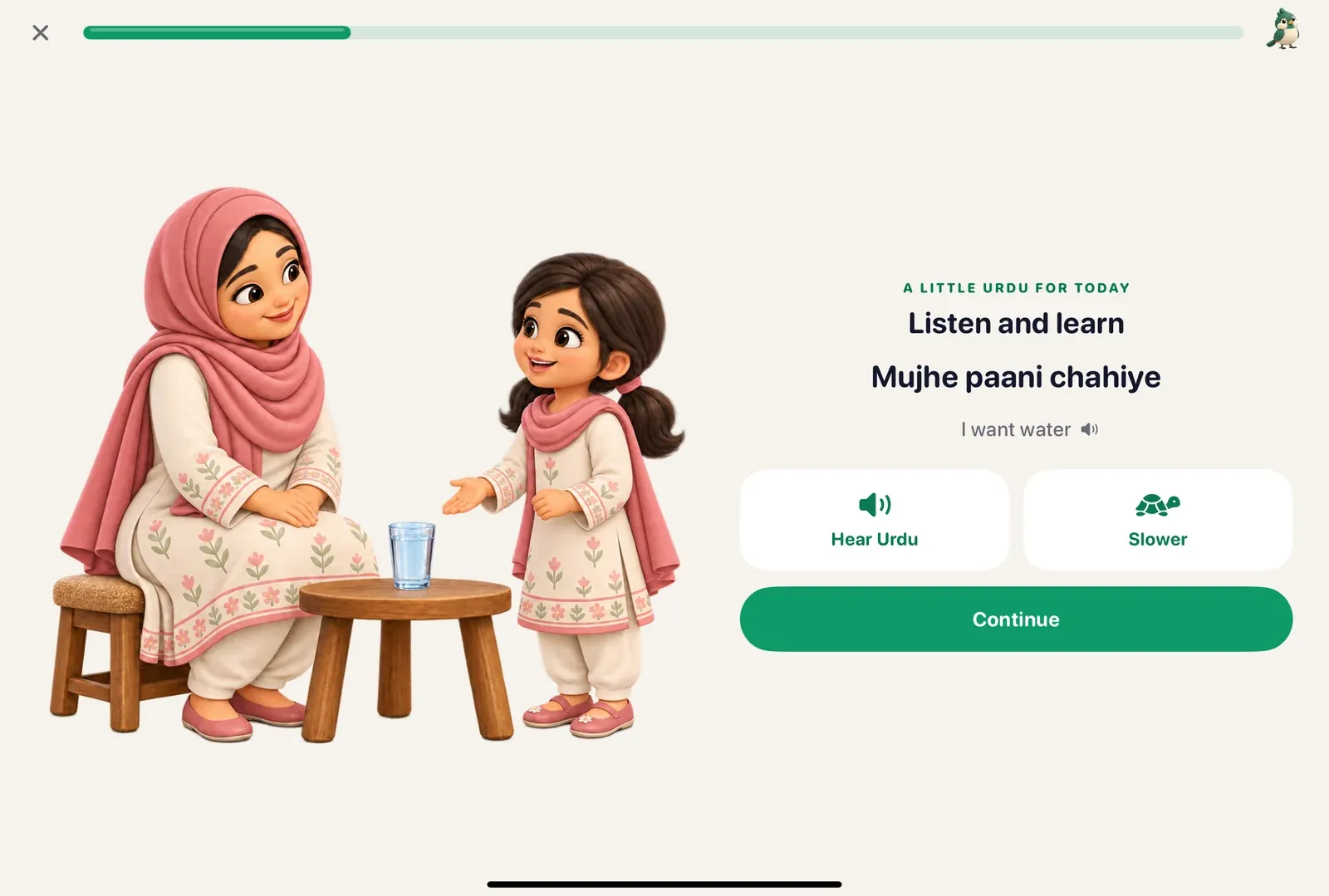
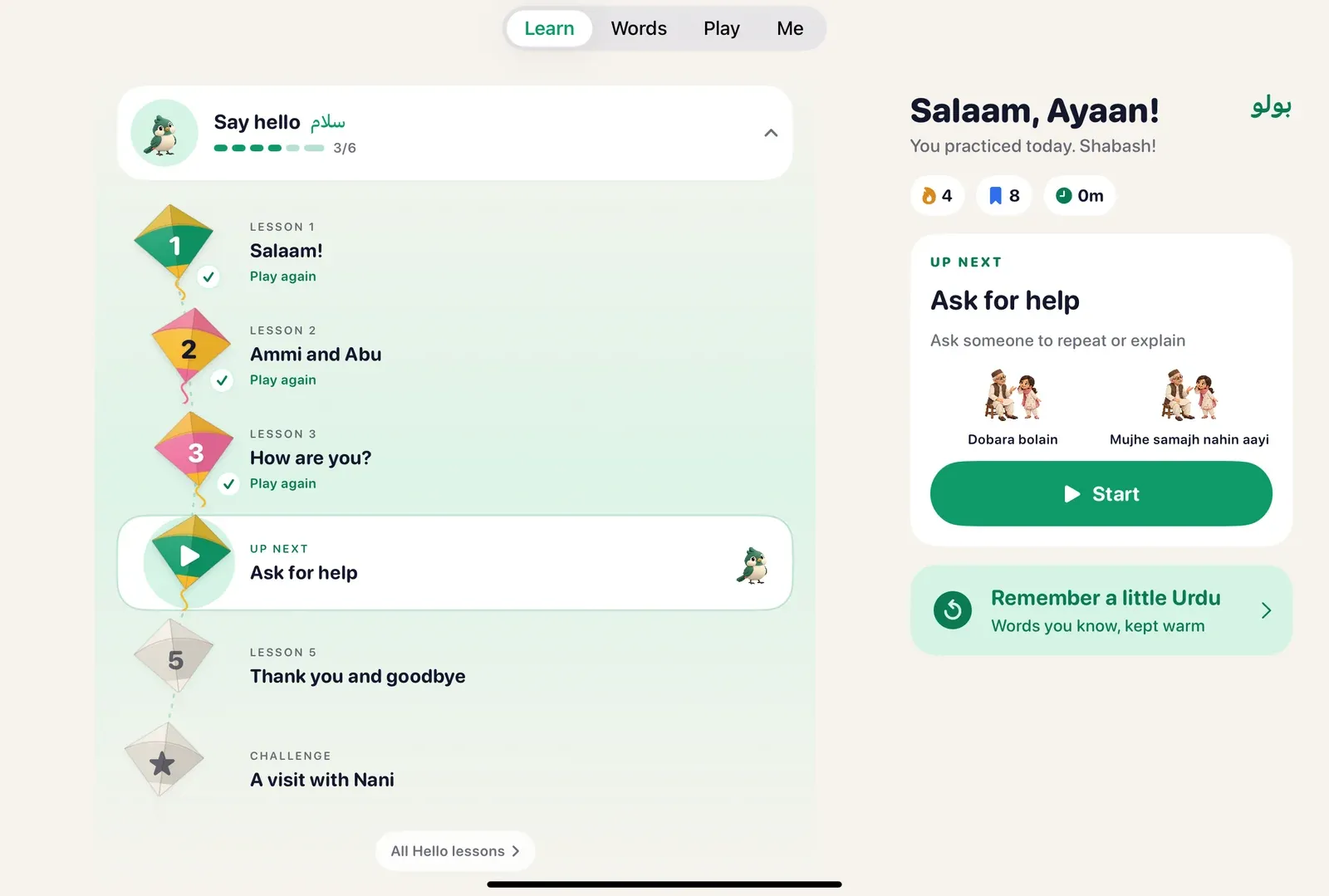
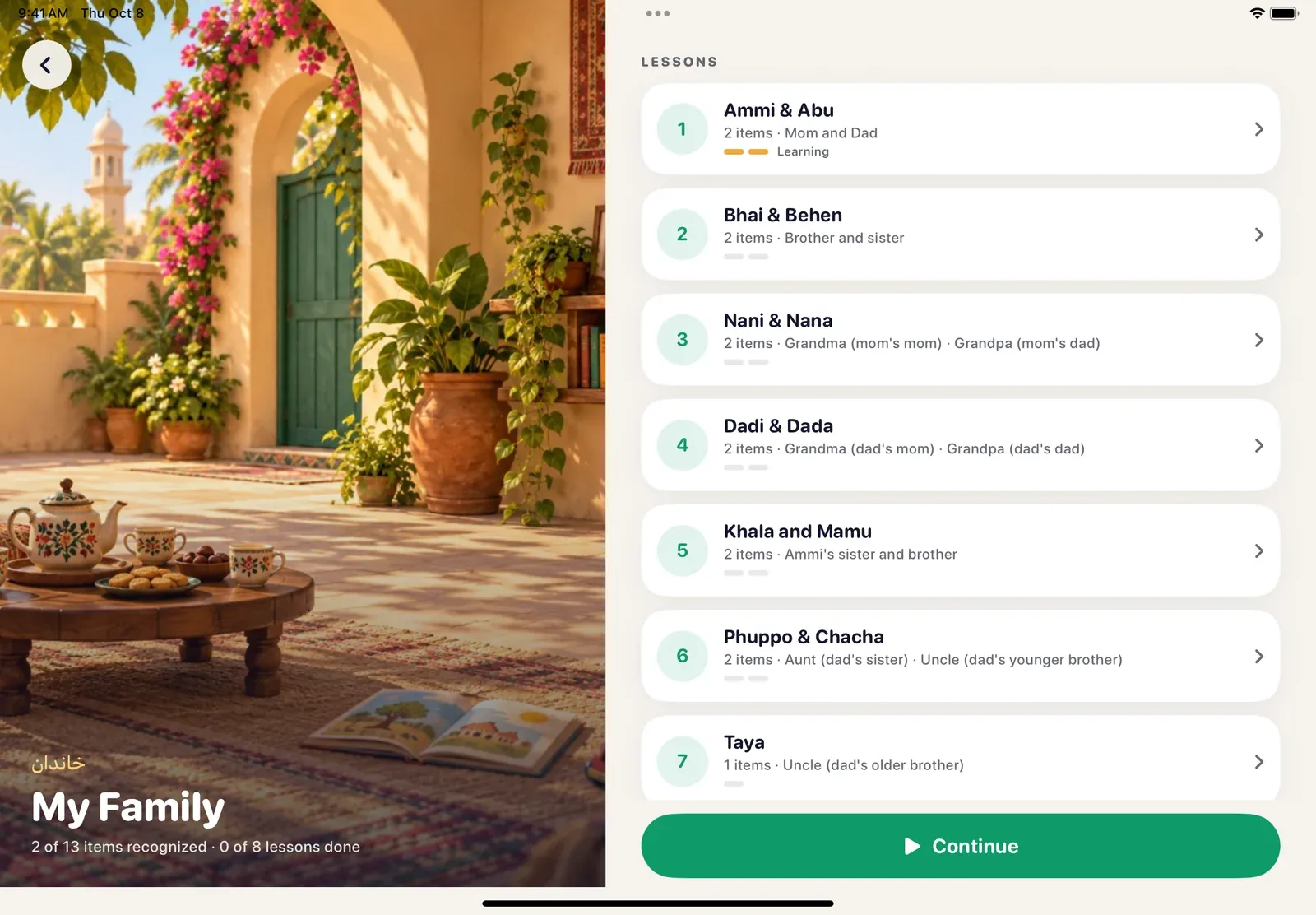
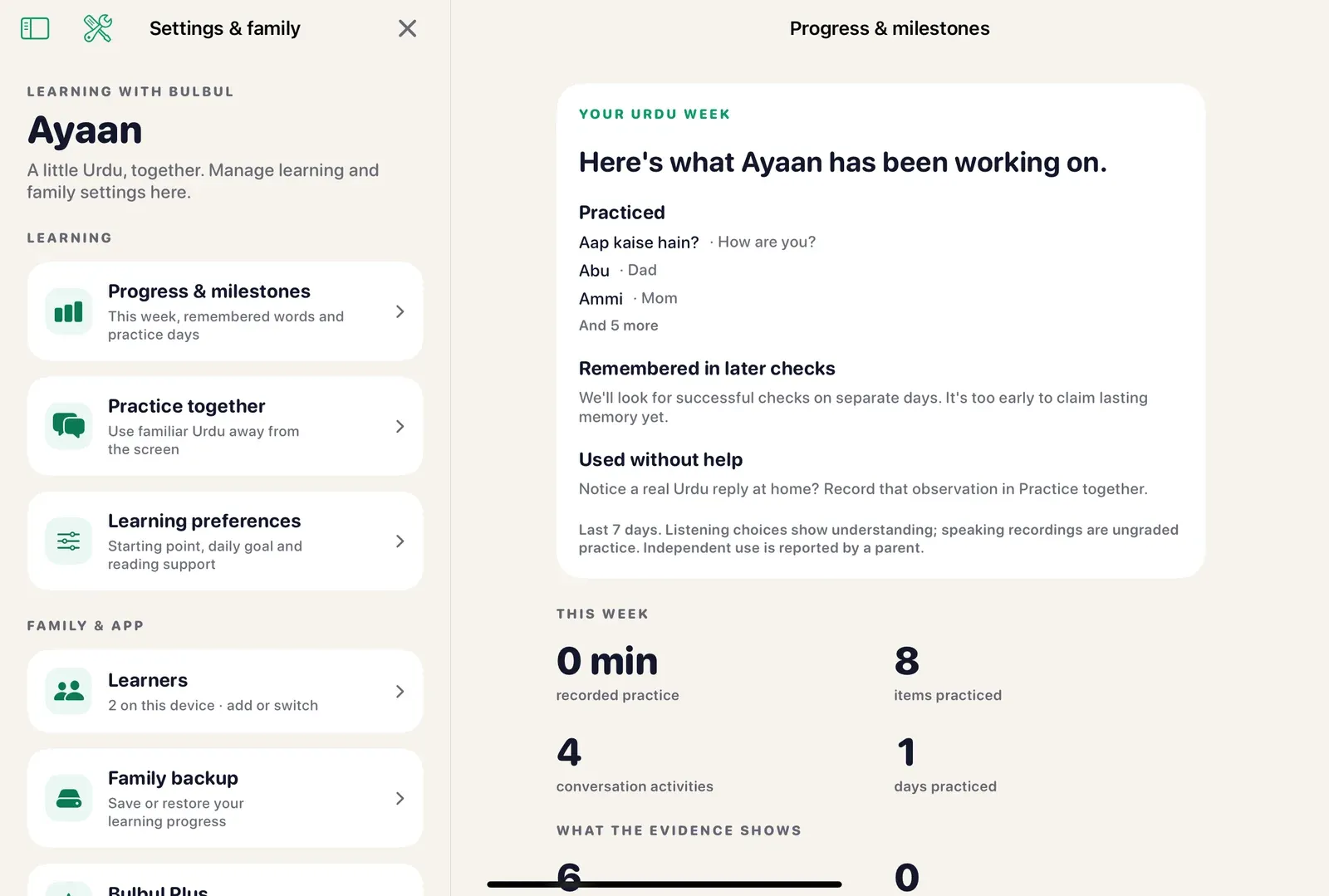
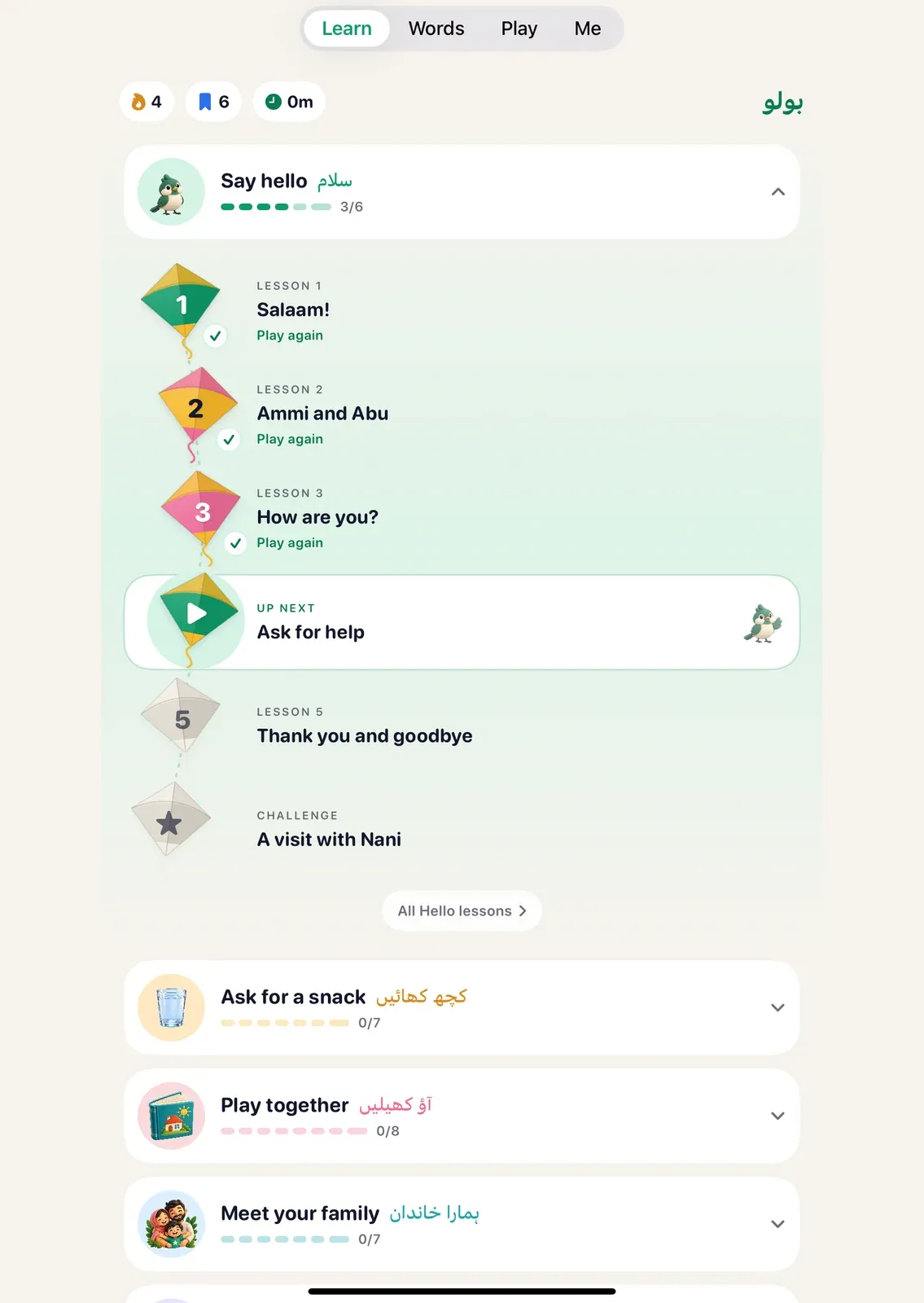
iPhone and iPad. Portrait, landscape or Split View. Up to six learner profiles.
Safe by design
No ads. No tracking. Your child's voice stays on your phone.
Bulbul asks children to speak, so we built it to keep what they say on the device. In plain words:
- Their voice stays on the phone Speaking tries are temporary files on the device, deleted when the lesson ends. Nothing is uploaded.
- No ads. Ever. No banners, no videos between lessons, no “watch to unlock”.
- No account to create Open the app and start. Progress lives on your device; save a family backup whenever you like.
- No tracking of children Bulbul doesn't send analytics or advertising data about learners.
- A grown-up gate Settings, subscriptions and the parent area sit behind a spelled-out number that little ones can't read.
- You're in control Switch Bulbul's speech check off, change the starting point, or turn reading support on or off.
Purchases go through Apple's App Store. Read the full privacy policy.
Why we built Bulbul
Built at our own kitchen table.
Bulbul is made by a parent, for parents who want their children to keep Urdu. Lessons are tried at home with a four-year-old who lets us know, loudly, when something doesn't make sense.
When he started answering Bulbul before anyone pressed a button, we rebuilt speaking practice around him. Now Bulbul simply listens. That's the kind of app we want Bulbul to be: patient, kind, and shaped by real children.
Questions parents ask
Good questions. Straight answers.
What is Bulbul?
Bulbul (بلبل, named after the songbird) is an iPhone and iPad app that helps children grow up speaking Urdu. Kids hear warm, clear Urdu, understand it through pictures and family moments, and say it out loud with Bulbul the songbird. It's made for families outside Pakistan whose children understand a little Urdu, or none, and answer in English.
What ages is Bulbul for?
Children from 3 to 12, set up in age bands (3–5, 6–8, 9–12), plus teens and adults who understand Urdu but want to speak it. Under-6s see at most two picture choices at a time and never need to read. For older children, a parent can turn on Roman Urdu or Urdu script as optional support.
My child doesn't speak any Urdu. Can they start?
Yes. Bulbul starts from zero with greetings like Assalam-o-Alaikum and “Aap kaise hain?”, and every word is heard with a picture before your child is asked to use it. If your child already understands a lot, a short optional listening check during setup can suggest a later starting point, and you can change it any time.
Do I need to speak Urdu myself?
No. Every line is spoken in the app and the English meaning is always one tap away. If you do speak some Urdu, each lesson ends with a small idea to try together at home, so Urdu moves from the screen to the dinner table.
Does Bulbul record my child's voice?
Bulbul listens so your child can practise speaking, but nothing is uploaded. Each try is a temporary file on the device and is deleted when the lesson ends or the app closes. Where the iPhone or iPad has Apple's on-device Urdu speech recognition, Bulbul checks the try on the device; otherwise Bulbul simply says “I heard you”. A grown-up can switch the check off in the parent area.
What happens when my child gets something wrong?
Nothing scary. Bulbul never says “wrong”. Bulbul shows the answer, plays it again and brings it back a little later in the lesson. Speaking gets at most three gentle tries, then “Good try!” and the lesson moves on. Your child can always skip.