Learning Urdu
When relatives use different Urdu words: a guide for parents
Hearing different Urdu words at home? Use a simple context check to clarify who or what each person means, with a worked family example and a reusable note.
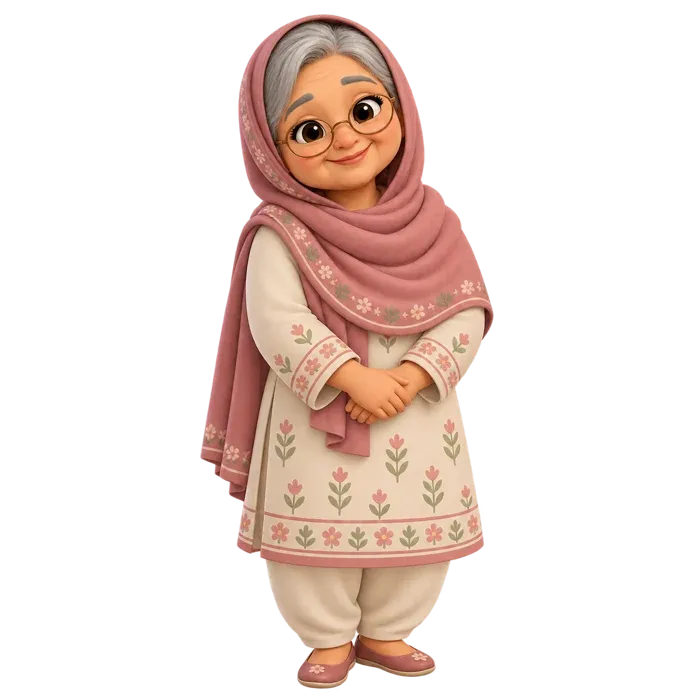
One adult gives your child an Urdu word. Another offers a different one. You want to help, but you are not sure whether they mean the same thing—or which explanation to pass on.
Before choosing a word, check the situation. Are both adults pointing to the same thing? Are they naming the same relative? Is one describing something while the other is asking for it?
You do not need to settle the question in front of your child. This guide offers a way to collect the details, ask the adults and return to a familiar activity. It is a practical conversation plan, not a list of which family’s Urdu is correct.
First, make sure you are comparing the same thing
An English label alone may leave out a detail that matters. A useful first question is: “Who or what do you mean here?”
For a person, check the relationship. For an object, look at the actual item together. For a longer line, ask what the speaker is trying to say in that moment. Avoid comparing an isolated word from one source with a whole sentence from another.
If you heard the word only briefly, ask the adult to repeat it before writing it down. If you are unsure how to spell it, mark the note as a rough reminder. A guess written neatly is still a guess.
A worked example: two grandmother labels
Imagine you are making a small family-photo activity. You have a picture of your child’s mother’s mother and another of their father’s mother. Both could sit under the English heading “grandmother,” but that heading does not show which side of the family each person belongs to.
In Bulbul’s existing public samples, Nani نانی (Grandma (mom's mom)) means the mother’s mother, while Dadi دادی (Grandma (dad's mom)) means the father’s mother. The Nani word page and Dadi word page show those meanings separately.
For this activity, check the relationship from your child’s point of view before placing each label. If you describe your own grandmother instead, you have changed whose relationship you are naming.
A completed note for the first picture could read:
- Who we mean: my child’s mother’s mother.
- Word on the sample: Nani.
- What we checked: the word page names that relationship.
- Question for the family: what does this person like the child to call her?
- Our activity: look at her photo together; the child can point, say a name or simply listen.
This example shows a difference in meaning. It does not establish that every pair of words you hear works this way, or that every family uses the same form of address. Ask about the actual words and people involved.
Ask about use before asking who is right
Choose a calm moment with the adult who offered the word. These questions can help you get a specific answer:
- “Which person or thing are you naming?”
- “Would you use that word in this exact situation?”
- “If I used the other word here, would it change what I mean?”
- “What would you like us to say during this activity?”
You can ask these questions in English or another language you share. There is no need to construct a new Urdu sentence just to investigate a word you are still learning.
Write down the explanation as that person’s explanation. If two adults still disagree, keep both accounts and the context. A fluent speaker or teacher may be able to help with the specific question; give them the actual wording rather than only saying that the family uses different Urdu.
Do not label the difference as a dialect, an error or a preference until you have a basis for doing so. You can leave the category open.
Keep the child’s part simple
The child does not need to judge the adults’ explanations. You can say, “I’m checking what this means. Let’s use a word we already know for now.”
If a relative offers a different word during play, acknowledge it and ask about it later. That lets you continue the picture, story or ordinary conversation without making the child repeat both versions for a verdict.
For the next shared activity, choose one item whose meaning you understand. Choosing it does not decide the status of every alternative. If the uncertain item is central to the activity, pick a different activity until you have the answer you need.
Copy this context note
Use this as a private note for the adults. You do not need to post family names, pictures or recordings to ask a general language question.
Person, object or situation: exactly what we are talking about.
Words we heard: wording from each speaker; mark uncertain spellings.
Each person’s explanation: what they say the word means here.
What we have checked: the source or explanation we can point to.
Question still open: the specific detail we want help with.
For our next activity: one familiar choice, or a decision to leave this item for later.
If someone explains the difference later, add the answer beside the question. Keep the context with it so a note about one situation does not turn into a rule for every situation.
Where Bulbul fits
Bulbul’s public word pages provide a small set of pictures, meanings and audio samples. Use the family-word guide to look up the relationships shown in those samples. They are a starting point for this activity, not an authority on every family’s preferred names.
If you are also learning, the beginner-parent guide can help you separate familiar material from questions for later. The caregiver guide offers a short way to pass an agreed activity to another adult.
The website samples are free. Bulbul’s app lessons and practice require Bulbul Plus; check the App Store and subscription screen for current terms.
Questions parents ask
What should I do if relatives teach my child different Urdu words?
Start by checking what each person means. Ask about the exact person, object or situation, and whether they would use the other word in that same setting. If the explanation is still unclear, keep it as a question for a fluent speaker or teacher rather than asking your child to decide.
Are two different Urdu words always interchangeable?
Do not assume that they are. For example, the public Bulbul samples Nani and Dadi both refer to a grandmother, but distinguish the mother's mother from the father's mother. Check the relationship or context before treating two labels as alternatives.
Do we need to settle every wording difference before practising together?
No. For a small family activity, you can use one familiar item whose meaning you understand and leave an uncertain item for later. That is a choice for the activity, not a claim that another person's wording is incorrect.